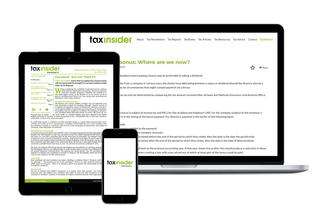
 DIGITAL
- Instant access to 840 digital articles
- Downloadable PDFs
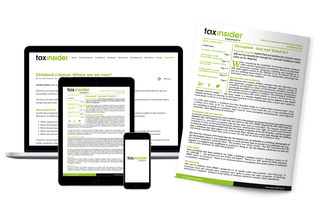 DIGITAL + PRINT
- Instant access to 840 digital articles
- Downloadable PDFs
- Print copy delivered monthly
-
Suitable for all business typesLtd companies, sole traders & partnerships
-
Digital format (or add print too)Whatever your preference, you've got it
-
Published every monthSo you're always kept up to date
-
90-day money back guarantee100% of your money back, no quibble
-
Instant back catalogue accessOver 840 articles to help you save tax
-
No commitmentNo minimum tie-ins, cancel anytime
Written by leading UK tax professionals
Every article is written and reviewed by practising accountants, Chartered Tax Advisers and specialist property tax consultants, including contributors such as Mark McLaughlin and Malcolm Finney. You're getting advice from people who advise real landlords and property investors on real tax problems, not generic guidance.
New articles published
in September 2026
 IHT Exemptions: The Detail That Makes or Breaks the Relief
As a general rule, a cash gift from one long-term UK resident individual to another is a ‘potentially exempt transfer’ (PET) for inheritance tax (IHT) purposes, subject to any available reliefs or exemptions. The gift is assumed to be exempt when made and becomes fully (as opposed to potentially) exempt if the donor survives for at least seven years.
Mark McLaughlin highlights the importance of following the rules closely when seeking to obtain an important inheritance tax exemption.
 Residential Landlord: Can You Ever Claim Capital Allowances?
Capital expenditure is not deductible against trading or rental profits, and accounting depreciation is similarly disallowed (ITTOIA 2005, s 33; CTA 2009, s 53).
Capital allowances exist as a separate statutory mechanism whereby qualifying expenditure on capital assets is given as a deemed deduction, spread over several years at prescribed rates.
Nick Wright examines the restriction on capital allowances for residential property, the case law meaning of 'dwelling house', and the limited circumstances in which residential landlords can still secure relief.-
Passing on the Family Home: Navigating the Tax Minefield
The family home is often the most valuable, and indeed valued, of a parent’s assets. As old age beckons, so thoughts turn to minimising future tax while not curtailing the parent’s enjoyment of their assets.
It is important to appreciate that there is no ‘one-size-fits-all’ solution, given the plethora of issues to address, which makes the obtaining of appropriate professional advice essential.
Debbie Reyland attempts to navigate the tax minefield of passing the family home to the next generation.
 Incorporating Your Property Portfolio: Is It Actually a Business?
Unincorporated landlords have been hit with a raft of adverse tax changes in recent years, and with the introduction of higher property tax rates from April 2027, landlords may decide that operating as a limited company is a better option.
For landlords looking to incorporate their property business, the availability of capital gains tax (CGT) incorporation relief can be a game changer, particularly where their property portfolio is pregnant with gains.Sarah Bradford looks at the meaning of ‘business’ in the context of capital gains tax incorporation relief.
-
Q&As with Arthur Weller
Some of our most popular articles
 Joint property letting vs partnerships
Property partnerships seem popular these days – typically, as a stepping-stone to greater things. Regular readers will know that I have long criticised HMRC’s published position on whether a property partnership exists, as distinct from simply co-owned property. My argument is that HMRC has drawn up its guidance to set an unreasonably high threshold to ‘make the grade’ as a partnership.
Lee Sharpe looks at whether a joint property letting activity amounts to a partnership, and why it is relevant to landlords.
- Main residence relief and multiple residences
Most people do not expect to have to pay capital gains tax (CGT) when they sell their home. Private residence relief (also known as main residence relief or principal private residence relief) normally applies in full when the property has been the taxpayer’s only or main residence throughout the whole period for which they have owned it.
Sarah Bradford outlines the concept of a ‘main’ residence for capital gains tax purposes.
- That old boiler: Repairs or improvement?
The government (HMRC) has become increasingly worried about the volume of small and medium-sized enterprise research and development (R&D) tax credit payments where a company claims to have undertaken eligible R&D activity (and it is important to keep in mind that only certain types of R&D may qualify – there are a lot of criteria).
Lee Sharpe looks at tax aspects of modernising property and the risk of disallowance as improvements that constitute capital expenditure, losing income tax relief in the property business.
 Investing in commercial property: Tax implications
Whether to buy commercial or residential property depends on various factors, not least the more beneficial tax system for commercial lets and whether an individual or a company is purchasing the property. The government wishes to encourage commercial lets and therefore permits a more generous tax regime than residential lettings.
Jennifer Adams considers some important tax benefits of investing in commercial property.
-
Q&As with Arthur Weller
Subscription Benefits
We asked our subscribers what they love about Property Tax Insider.
These are the top 7 reasons that they gave us:
Monthly Newsletter
DIGITAL
- Instant access to 840 digital articles
- Downloadable PDFs
DIGITAL + PRINT
- Instant access to 840 digital articles
- Downloadable PDFs
- Print copy delivered monthly
-
Suitable for all business typesLtd companies, sole traders & partnerships
-
Digital format (or add print too)Whatever your preference, you've got it
-
Published every monthSo you're always kept up to date
-
90-day money back guarantee100% of your money back, no quibble
-
Instant back catalogue accessOver 840 articles to help you save tax
-
No commitmentNo minimum tie-ins, cancel anytime
Property Tax Insider…