101 Employer and Employee Tax Tips
How employers and employees can use the tax exemptions and reliefs for pay, benefits, company cars and expenses to save tax and National Insurance.
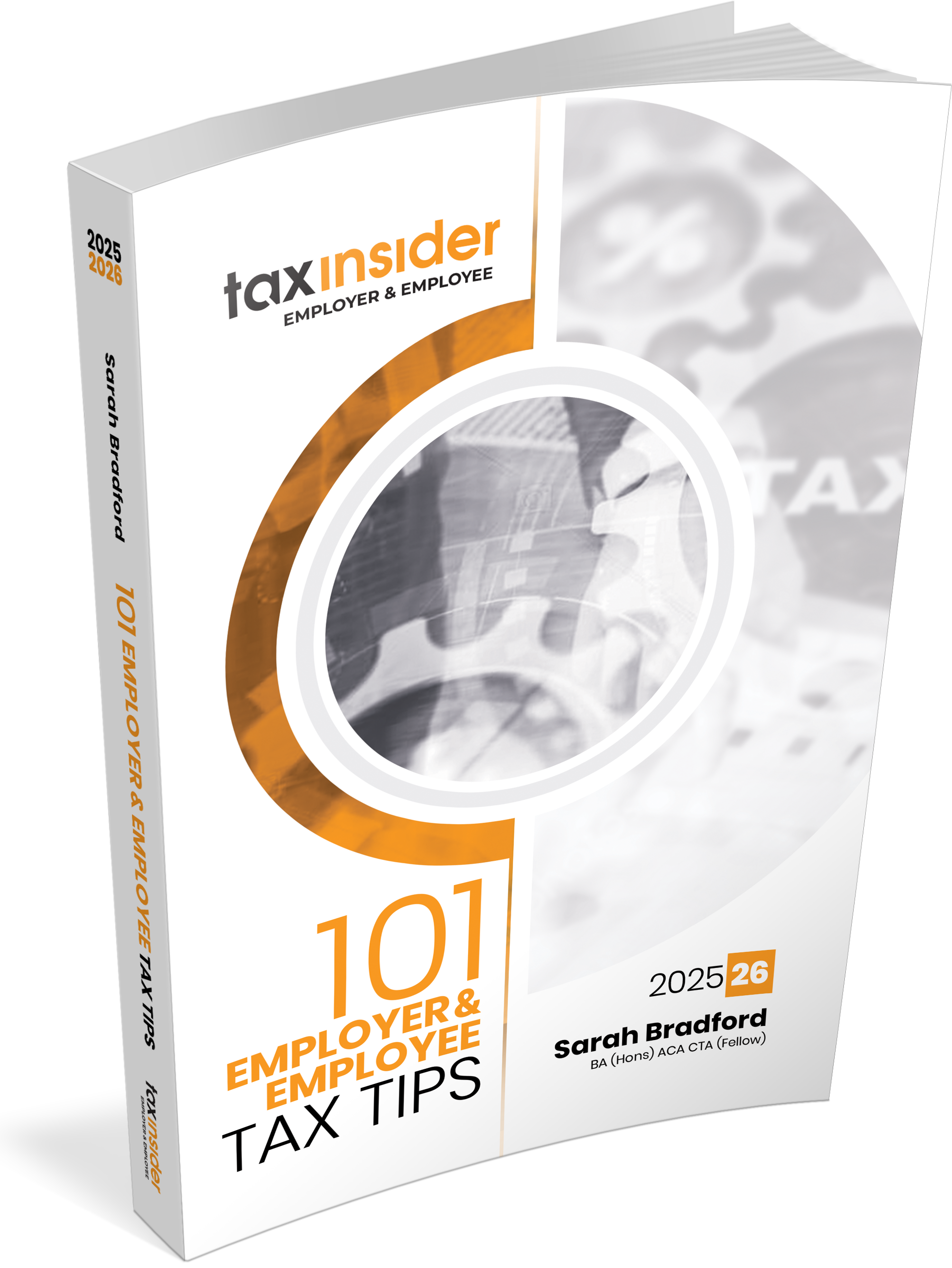

** Brand New 2026/27 Edition Now Available **
Tax-Efficient Remuneration for Employers and Employees
By Sarah Bradford BA (Hons), FCA, CTA (Fellow)
The opportunities for employees to legitimately reduce the tax that they pay are more limited than for the self-employed and those operating through a family company. However, the tax legislation includes a surprisingly large number of exemptions and reliefs, which make it possible for employers to implement tax-efficient remuneration strategies and to provide elements of the remuneration package free of tax.
Written by tax specialist Sarah Bradford, this guide contains 101 tax tips for employees and employers. It highlights the exemptions and reliefs available to employees and the strategies for tax-efficient remuneration, from salary sacrifice and company cars to tax-free benefits, employment expenses and PAYE.
What Are Tax-Free Employee Benefits?
When an employer provides an employee with a non-cash benefit, known as a benefit in kind, the employee is normally taxed on the cash equivalent of that benefit, and for most benefits the employer pays Class 1A National Insurance. The benefit must be reported to HMRC on the employee's P11D or payrolled.
A tax-free benefit is one that falls within a specific exemption. Where the conditions are met, an employer can provide benefits such as a mobile phone, workplace parking, a cycle to work scheme, pension contributions, work-related training and trivial benefits costing £50 or less without the employee paying tax on them. Each exemption has its own conditions, and many are lost if the benefit is provided through a salary sacrifice arrangement.
Salary Sacrifice, Company Cars and Tax Traps
The exemptions are valuable, but the conditions are applied strictly. Since 6 April 2017, the alternative valuation rules have meant that most benefits provided through salary sacrifice or another optional remuneration arrangement (OpRA) are taxed on the salary given up where this is higher than the normal cash equivalent, so the exemption is lost. Only a handful of benefits, such as pension savings, childcare vouchers, workplace nurseries, cycle to work schemes and cars with CO2 emissions of 75g/km or less, remain outside these rules, and from 6 April 2029 only the first £2,000 of salary given up for pension contributions will benefit from National Insurance savings.
Some limits are all or nothing: if an annual function costs more than £150 per head, or an allowance for incidental overnight expenses on a UK trip is more than £5 a night, the whole amount is taxable, not just the excess. Company cars and fuel bring their own traps. Free fuel is rarely worthwhile unless private mileage is very high, making good only part of the cost of private fuel leaves the fuel benefit charge in full, and the appropriate percentage for an electric car rises from 4% in 2026/27 to 9% in 2029/30.
Employees face harsh tests too. A deduction for employment expenses is only allowed if the expense is incurred wholly, necessarily and exclusively in the performance of the duties, and from 2026/27 employees can no longer claim a deduction for the additional costs of working from home. Structured well, the remuneration package can generate tax and National Insurance savings for the employee and National Insurance savings for the employer.
What This Book Covers
Updated for 2026/27, this guide sets out 101 tax tips, plus a bonus tip, in nine chapters, with over 90 worked examples. Here is a list of the key chapters in the book:
- Tax-Efficient Remuneration
- Travel, Transport And Meals
- Cars, Vans And Other Vehicles
- Family And Welfare Benefits
- Other Popular Benefits
- Termination Of Employment
- Relief For Employment Expenses
- Share Incentives
- Compliance Issues And Saving Work
Tax-efficient remuneration and salary sacrifice
How to design a remuneration package that takes advantage of the tax and National Insurance exemptions and reliefs, which benefits can still be provided tax-free through salary sacrifice, and how the alternative valuation rules for OpRAs work. The chapter also shows how choosing a non-cash benefit instead of salary saves employee National Insurance, and why most exempt benefits are better provided in addition to salary than in exchange for it.
Travel, transport and meals
Tax-free and NIC-free mileage allowance payments at the approved rates, mileage allowance relief where the employer pays less, passenger payments and HMRC's advisory fuel rates, including the rates for electric company cars. The chapter also covers workplace parking, cycle to work schemes, works buses and subsidised bus services, late night taxis, incidental overnight expenses, benchmark subsistence rates, free tea and coffee, and workplace canteens.
Company cars, vans and fuel
The largest chapter explains how the car benefit charge depends on the list price and CO2 emissions, the rising appropriate percentages for electric and hybrid cars up to 2029/30, optional accessories, capital contributions (which only reduce the price by up to £5,000), private use contributions, periods of unavailability and cash alternatives. It also covers the diesel supplement, when free fuel is worth having, making good the cost of private fuel by the deadline, pool cars, company vans (including tax-free electric vans), cars for disabled employees and tax-free workplace charging.
Family, welfare and other popular benefits
Workplace nurseries, the trap of reimbursing childcare costs, private medical insurance, flu vaccines, eye tests, health screening and recommended medical treatment, and how timing a bonus can increase statutory maternity pay. The guide then covers pension provision and pension advice, mobile phones, Christmas parties and annual functions, sporting facilities, relocation assistance, suggestion scheme and long-service awards, work-related training, homeworking, season ticket loans and the trivial benefits exemption.
Termination payments and employment expenses
Why the first £30,000 of a termination payment is not automatically tax-free, how post-employment notice pay and statutory redundancy pay interact with the £30,000 threshold, and when outplacement counselling is exempt. For employees, the guide explains the tests for deducting employment expenses, reimbursed expenses and round sum allowances, travel expenses and temporary workplaces, professional fees and annual subscriptions, and how to claim a deduction, including the evidence needed to support a claim.
Share schemes and PAYE compliance
The tax-advantaged share incentive plan, SAYE and CSOP schemes, and when a non-tax-advantaged scheme may suit. The final chapter covers PAYE Settlement Agreements, the RTI ‘on or before’ requirement and late payment penalties, claiming the £10,500 employment allowance, HMRC's Basic PAYE Tools and the higher secondary thresholds for workers under 21, apprentices under 25 and armed forces veterans, with a bonus tip on employing part-time workers.
Who Will Benefit From This Book?
This guide is for employers and employees. Employers, from micro employers with nine or fewer employees to larger employers considering a workplace nursery, will find ways to provide pay and benefits tax-efficiently and to avoid PAYE penalties. Employees will find the exemptions and reliefs available to them and the expenses they can claim.
It is also popular with accountants and tax practitioners.
About Sarah Bradford FCA CTA
Sarah Bradford BA (Hons), FCA, CTA (Fellow) is a Chartered Accountant and Chartered Tax Adviser, and director of Writetax Ltd, a company providing technical writing services on tax and National Insurance. She writes widely on tax and National Insurance and is a regular contributor to Business Tax Insider, Property Tax Insider and Tax Insider Professional.
101 Employer and Employee Tax Tips was first published in September 2013 as ‘101 Employee and Employer Tax Secrets Revealed’, and this is its eighth edition, correct at the time of writing in May 2026.
Read an excerpt from this book: Salary Sacrifice Arrangements Can Still Be Beneficial.