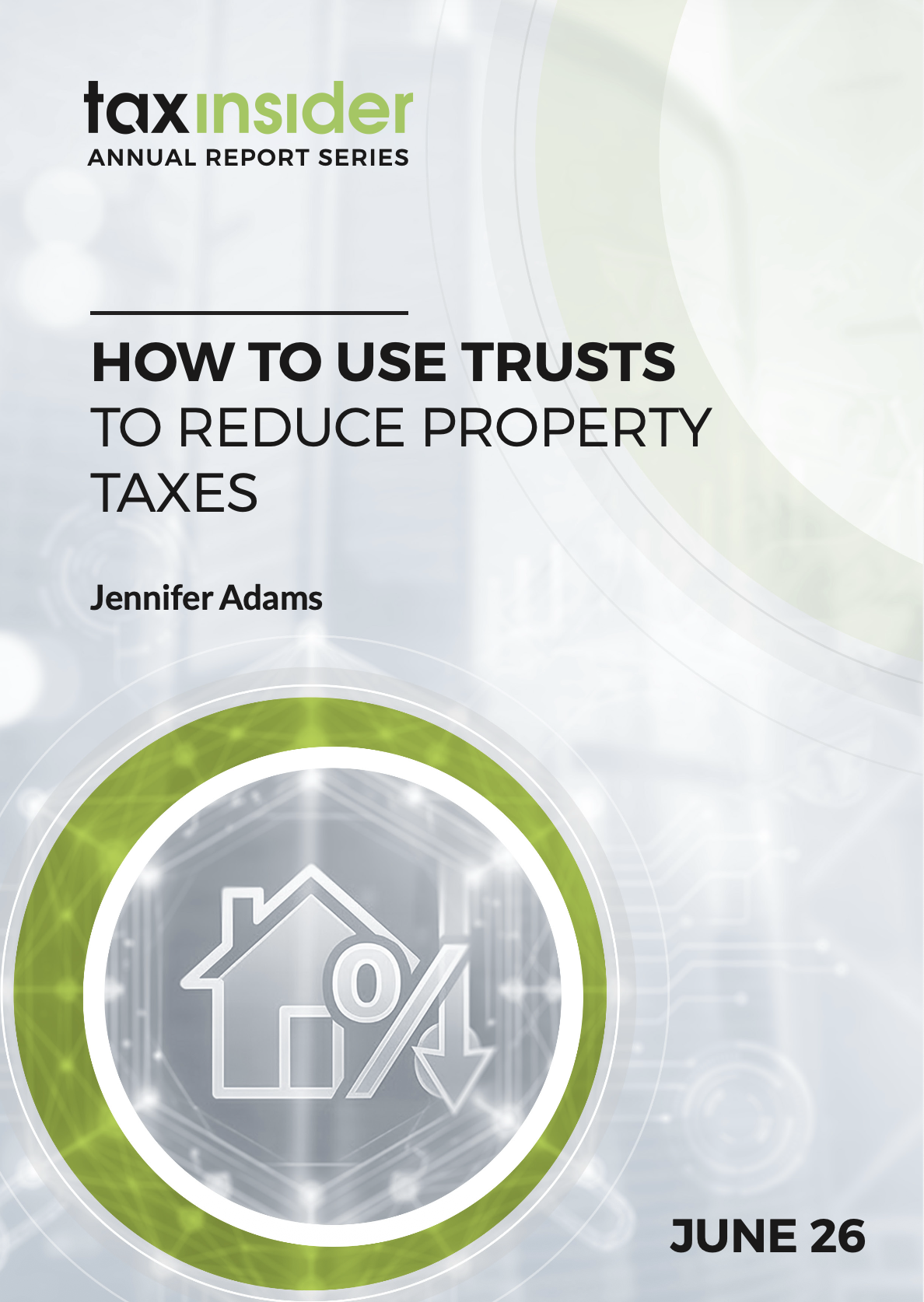
How to Use Trusts to Reduce Property Taxes
You can reduce your property taxes by using trusts and this guide will show you how, get yours today to
start learning how to reduce your property taxes.

** New 2026-27 Edition Now Available - 40% Early Bird Discount **
Using Trusts to Reduce Property Taxes
By Jennifer Adams TEP, FCIS, FATT
Property trusts are one of the most underused tools in personal tax planning and one of the most misunderstood. The assumption that they are complicated, expensive and best left to the very wealthy has kept many clients from a planning strategy that is, in practice, straightforward to establish and capable of delivering substantial savings across income tax, capital gains tax and inheritance tax.
The landscape has never made this planning more necessary. Rising property values mean more estates are crossing the inheritance tax threshold. The freezing of CGT annual exempt amounts has sharply increased the tax cost of disposals. Income from buy-to-let property is taxed at marginal rates, with mortgage interest relief severely restricted for individuals. For many of your clients, the question is no longer whether to consider trust planning, it is how to do it correctly.
Get it right, and a property trust can protect client assets, reduce tax across multiple heads, and provide a structured mechanism for passing wealth to the next generation. Get it wrong, and the consequences range from unexpected HMRC challenges to failed gifts, clawback exposure and unintended inheritance tax liabilities and the professional risk that comes with them.
In this practical and authoritative guide, Jennifer Adams, a qualified member of the Society of Trust and Estate Practitioners (STEP), Fellow of the ATT and Consulting Editor of AccountingWEB, sets out everything advisers need to know to establish, manage and plan around property trusts effectively on behalf of their clients.
This report will show you how to:
- Understand how property trusts are legally constituted and advise clients with confidence
- Identify when setting up a trust is the right planning choice for a client — and when it is not
- Avoid the critical trap that affects single property trusts and can undermine an entire structure
- Minimise income tax on rental and investment property income using trusts
- Minimise capital gains tax on property disposals through careful trust planning
- Minimise inheritance tax exposure using trusts, including the use of nil rate band planning
- Choose between different trust types — discretionary, life interest, bare and others — and advise on which suits each client situation
- Plan effectively where minor beneficiaries are involved, including the use of 18-25 trusts
- Advise clients on gifting property to children or other family members in a tax-efficient and legally robust way
- Structure property transfers between spouses using trusts without triggering unintended tax charges
- Draft and explain deeds of trust to clients with clarity and precision
- Identify and manage clawback risk in client property trust arrangements
- Plus much more…
Who will benefit from this report?
This guide is essential reading for any accountant, tax adviser or solicitor with clients holding property personally, jointly or within family structures. It is equally valuable for in-house tax professionals and advisers dealing with residential landlords, buy-to-let investors and family property portfolios.
If you advise clients on property taxation and want a reliable, practical reference for trust-based planning, this guide belongs on your shelf.
About the Author
Jennifer Adams TEP, FCIS, FATT is a professional business author and accountant specialising in corporate governance and taxation, and Consulting Editor of AccountingWEB. She is the proprietor of Naldrett Accountants, a two-office practice based in Surrey and Dorset.
Jennifer has written for many of the leading specialist providers of legal, tax and regulatory publications, including Butterworths, Tolleys, LexisNexis, BDO, Sage, the Chartered Governance Institute and the Chartered Insurance Institute. She is a Fellow of the Institute of Chartered Secretaries and Administrators, a Fellow of the Association of Taxation Technicians, and a qualified member of the Society of Trust and Estate Practitioners (STEP). She is the author of 101 Property Tax Tips and writes monthly articles and tax guides for Tax Insider.