Exit and Succession Tax Planning for Businesses
How to sell, gift, close or pass on your business tax-efficiently, including Business Asset Disposal Relief, Gift Hold-over Relief, business property relief, employee ownership trusts and management buy-outs.
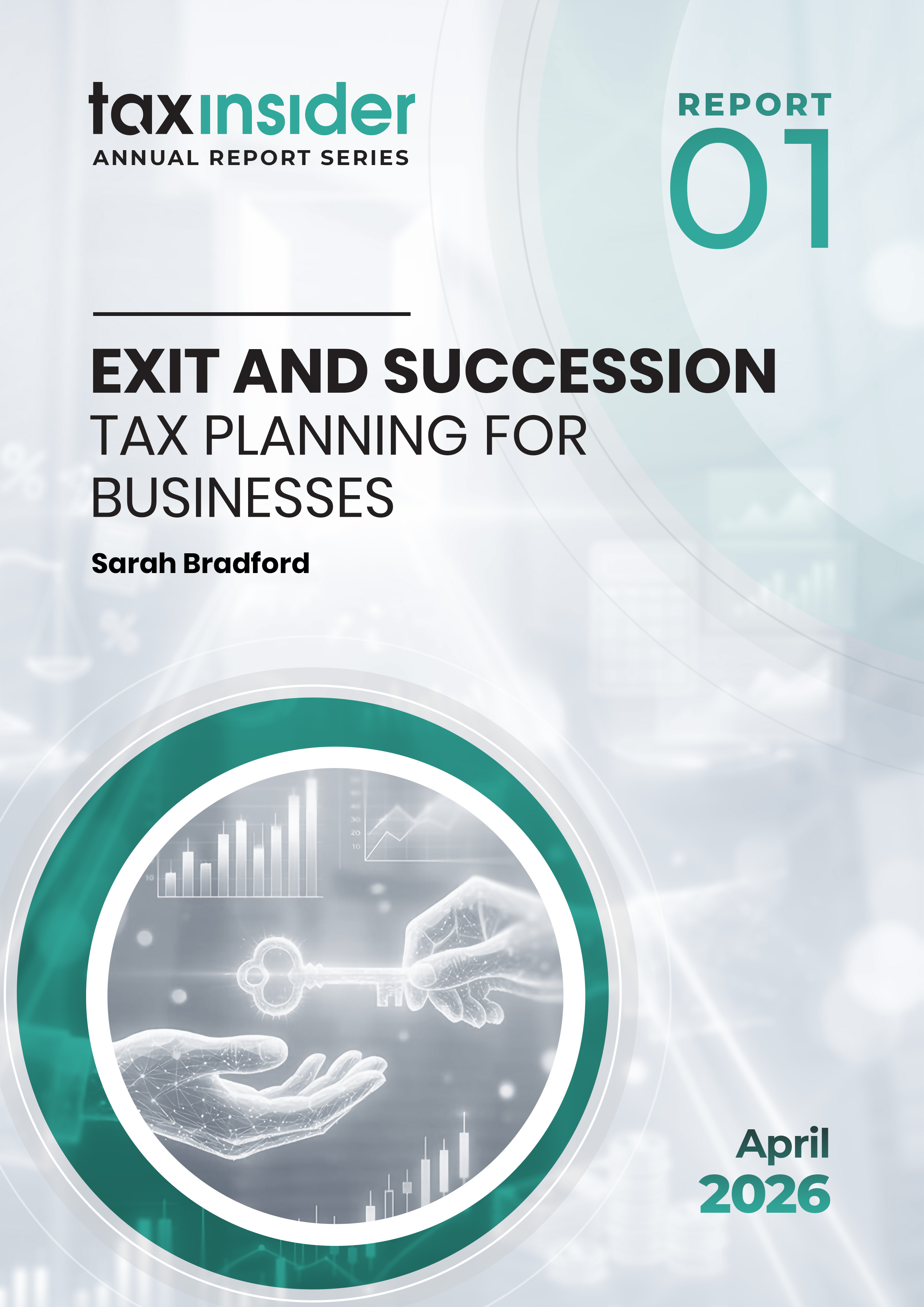


Brand New Tax Saving Report Released Tuesday 21st April 2026
Exit and Succession Tax Planning for Business Owners
By Sarah Bradford BA (Hons), FCA, CTA (Fellow)
Exit and succession tax planning helps business owners, whether sole traders, partners or shareholders in owner-managed and family companies, decide how they will step away from their business and what will happen to it when they die. The routes include selling the business, giving it to family, passing it to employees or a management team, or closing it down, and the tax that follows depends on how the business is structured and on the owner's personal circumstances.
Written by Chartered Accountant and Chartered Tax Adviser Sarah Bradford, and fully updated for 2026/27, this practical guide sets out the capital gains tax, income tax and inheritance tax implications of each exit and succession route, explains the reliefs available and shows how to plan ahead so that their qualifying conditions are met on the planned exit date.
What Is Exit and Succession Planning?
An exit strategy is a plan for how a business owner will leave or sell their business, and it may form part of their retirement planning. The options include selling the business or its assets, passing it on to family members, a management buy-out or a sale to an employee ownership trust. Where the business is run through a limited company, the company may be able to buy back the owner's shares, and where the business depends on one person's skills, closing it down may be the best route.
Succession planning deals with what will happen to the business if the owner dies. The business or its assets can pass to family members, or be sold and the proceeds shared among the beneficiaries of the Will. Without a Will, the intestacy rules apply, which may not reflect the owner's wishes and may result in unnecessary tax bills.
Business Exit Tax Reliefs and Why Timing Matters
Most business owners pour decades into building something valuable. Yet when it comes to stepping back, through retirement, a sale, or passing the business on, the majority have given little thought to the tax consequences of how they do it. That's an expensive oversight. The route you choose, and when you choose it, can mean the difference between walking away with the lion's share of what you've built, or handing a significant portion to HMRC unnecessarily.
Many of the key reliefs only apply if their conditions have been met for a qualifying period, so they cannot be arranged at the last minute. Business Asset Disposal Relief (BADR) generally needs the conditions to be met for the two years up to the disposal, assets must be sold within three years of the business ceasing, and a spouse or civil partner given shares to use their own £1 million lifetime limit must meet the conditions for two years before the sale. The rules have also changed: from 6 April 2026, BADR gains are taxed at 18% and 100% business and agricultural property relief is capped at £2.5 million, while only half of the gain on a disposal to an employee ownership trust on or after 26 November 2025 qualifies for relief.
The good news is that with the right planning, there are legitimate and well-established reliefs available. The challenge is knowing which ones apply to your situation, and acting early enough to use them.
What This Report Covers
In five chapters with 21 worked examples, based on the law as at 28 February 2026 and the 2026/27 rates and allowances, this guide will show you how to:
- Plan tax-efficient exits for sole traders, partnerships, personal and family companies
- Stay compliant with fully updated 2026/27 tax laws
- Maximise BADR and reduce your capital gains tax bill
- Apply 21 real-world examples to your own situation
- Avoid costly mistakes when planning your business exit
- Minimise inheritance tax with BPR and Will strategies
- Navigate different company closure routes with confidence
- Explore EOT and management buy-out as exit options
- Never miss a key qualifying period for tax relief
- Defer tax liability using Gift Hold-over Relief
- Plus more...
Sole traders: selling, gifting or closing the business
Why an unincorporated business cannot be sold "as a business", how BADR applies to a sale of the business assets and goodwill or to assets sold within three years of the business ceasing, and why it is not available on goodwill transferred to a close company in which the owner keeps a stake of at least 5%. The guide also covers Gift Hold-over Relief on business assets given away or sold at an undervalue, including partial claims, terminal loss relief on cessation, and succession steps such as making a Will, putting a Lasting Power of Attorney in place and incorporating so that the business can continue after the owner's death.
Partners and LLPs: leaving or dissolving a partnership
What the Partnership Act 1890 and the partnership agreement mean for a partner's exit, and how Statement of Practice D12 deals with the valuation of a partner's share, assets divided in kind, payments outside the partnership accounts, goodwill and annuities paid to retired partners. It explains when a disposal of all or part of a partnership interest qualifies for BADR, relief for assets a partner owns personally under the associated disposal rules, Gift Hold-over Relief on gifts and sales at an undervalue, and terminal loss relief when a partner's notional trade ceases.
Selling or gifting shares in a personal or family company
The conditions for BADR on a sale of shares, including the 5% tests for a personal company, the officer or employee requirement and the two-year qualifying period, and how transferring shares to a spouse or civil partner at least two years before a sale can make use of both lifetime limits. It also covers Gift Hold-over Relief on gifts and discounted sales of shares to the next generation, claiming the relief under Statement of Practice 8/92 without a formal valuation, and BADR on assets owned personally and used by the company under the associated disposal rules.
Company buy-backs, employee ownership trusts and management buy-outs
How a company can buy back a retiring shareholder's shares under the Companies Act 2006, and why any payment above the capital returned is taxed as an income distribution. The guide explains the capital gains tax relief on a disposal to an employee ownership trust, including the 50% restriction for disposals on or after 26 November 2025, the conditions strengthened from 30 October 2024 and the four-year clawback, as well as BADR and stamp duty on a management buy-out.
Closing down a company
The solvent and insolvent routes to closing a company, from striking off and members' voluntary liquidation to administration, creditors' voluntary liquidation, compulsory liquidation and company voluntary arrangements, plus the option of letting the company become dormant. It explains why distributions made before a strike-off only receive capital treatment where the company's assets are £25,000 or less, why paying dividends to get under that limit can backfire, and how a members' voluntary liquidation has no such cap, so distributions can be taxed at 18% where BADR is available.
Inheritance tax, business property relief and Will planning
How business property relief (BPR) can let a business, a partnership share or unlisted shares in a family company pass free of inheritance tax, the two-year ownership rule, and the 50% rate for land, buildings and machinery owned personally and used by a partnership or a company the owner controls. It covers the £2.5 million cap on 100% business and agricultural property relief from 6 April 2026 and how an unused allowance passes to a surviving spouse or civil partner, lifetime gifts as potentially exempt transfers, the nil rate band and residence nil rate band, and why a Will should be made and reviewed regularly.
Who Will Benefit From This Report?
This guide is essential reading for any sole trader, partner or company owner who is planning to sell, retire, hand the business to the next generation or close it down, and who wants to understand their exit options before it's too late to use them effectively. It is equally valuable for accountants and tax advisers who work with owner-managed businesses and family companies and need a reliable, practical reference on succession and exit planning.
If you advise business owners, or you are one, this guide belongs on your shelf.
About Sarah Bradford FCA CTA
 Sarah Bradford BA (Hons), FCA, CTA (Fellow) is a Chartered Accountant and Chartered Tax Adviser and director of Writetax Ltd, a company providing technical writing services on tax and National Insurance.
Sarah writes widely on tax and National Insurance and is a regular contributor to Business Tax Insider, Property Tax Insider and Tax Insider Professional. She is the author of numerous Tax Insider guides, including 101 Business Tax Tips, Tax-Efficient Profit Extraction For Companies, Directors' Loan Accounts Explained and How To Maximise Deductions For Business Expenses.
Read an excerpt from this report: Disposal of Shares in a Personal or Family Company and BADR.